
Subscribe
- முகப்பு
- கல்கி
- மங்கையர் மலர்
- தீபம்
- கோகுலம்/Gokulam
- முக்கிய பிரிவுகள்முக்கிய பிரிவுகள்
- தொகுப்புகள்தொகுப்புகள்
- PremiumPremium

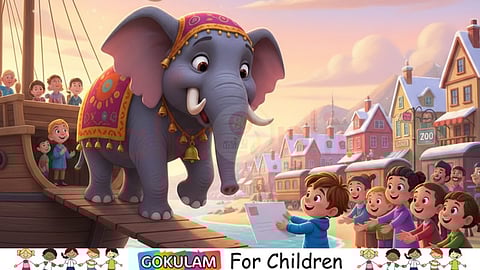
In 1953, a five-year-old Canadian boy named Peter Marmorek lived in the small town of Granby, Quebec. Like many children, he loved animals and often visited the local zoo. One day, he noticed that the zoo did not have an elephant. To Peter, this felt like something important was missing.
Instead of simply wishing for one, Peter decided to act. With the help of his parents, he wrote a simple postcard to Jawaharlal Nehru, the Prime Minister of India. The message was polite and innocent, asking if India could send an elephant to Granby Zoo.
At that time, India was newly independent, and Nehru was known internationally for his warmth, especially toward children. He believed that small gestures could build strong relationships between nations. This approach later became known as 'elephant diplomacy', where India gifted elephants as symbols of friendship.
Nehru did not ignore the postcard. He personally approved the request.
In 1955, a two-year-old female elephant named Ambika was sent from India to Canada. Her journey involved ships, trains, and special caretakers to ensure her safety. When Ambika finally arrived in Granby, the entire town gathered to welcome her. For many Canadians, it was the first time they had ever seen a real elephant.
Ambika lived in the zoo for many years and became its main attraction. But her story was more than just about an animal. It became a symbol of how kindness and simple communication can cross continents.
This incident is historically documented and often cited in diplomatic records. It shows that international relations are not always shaped by treaties and politics—sometimes they begin with a child’s postcard and a leader who chooses to listen.
The lesson is gentle but powerful: no voice is too small to be heard, and no question is too simple to create change.
