
Subscribe
- முகப்பு
- கல்கி
- மங்கையர் மலர்
- தீபம்
- கோகுலம்/Gokulam
- முக்கிய பிரிவுகள்முக்கிய பிரிவுகள்
- தொகுப்புகள்தொகுப்புகள்
- PremiumPremium

In 1815, a British naval ship named HMS Guardian was sent to carry young breadfruit plants from the Pacific islands to the Caribbean. The mission was not military or political—it was meant to fight hunger by introducing a cheap food source to enslaved poor populations.
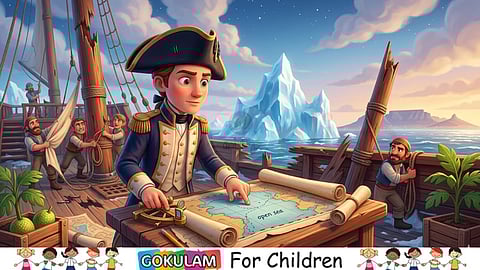
Halfway through the journey, the ship struck an iceberg in the Southern Ocean. Water flooded the hull, the rudder broke, and most officers believed survival was impossible. According to all existing maps, no safe land existed within reach.
But Lieutenant Edward Riou refused to surrender. Instead of trusting the official charts, he questioned them. He suspected the maps were incomplete and decided to navigate toward an area marked as “open sea.”
For weeks, the damaged ship drifted with limited food, broken instruments, and rising despair. Crew members prepared for death. Yet, Riou continued adjusting the course using stars, intuition, and calculations made by hand.
Eventually, land appeared—Table Bay near South Africa. The ship barely reached the coast, but nearly the entire crew survived.
The official maps were later corrected. A safe route had existed all along, but no one had dared to challenge the authority of printed knowledge.
The incident became a quiet lesson in leadership: information is powerful, but blind trust in it can be dangerous. Progress often comes not from having better tools, but from questioning whether the tools are telling the whole truth.
Riou’s success was not based on strength, resources, or luck. It came from one decision—to doubt what everyone else accepted as final.
Motivation rarely comes from dramatic victories. Sometimes, it comes from choosing to think independently when all evidence says you are wrong.
