
Subscribe
- முகப்பு
- கல்கி
- மங்கையர் மலர்
- தீபம்
- கோகுலம்/Gokulam
- முக்கிய பிரிவுகள்முக்கிய பிரிவுகள்
- தொகுப்புகள்தொகுப்புகள்
- PremiumPremium

A forgotten true event that puzzled scientists for centuries.
History remembers great wars and kings—but sometimes, the strangest moments are quiet, unexplained, and almost lost in time. One such event happened on May 19, 1780, in the region of New England (now part of the USA). Most people today have never even heard of it—yet it shocked thousands and remained a mystery for generations.
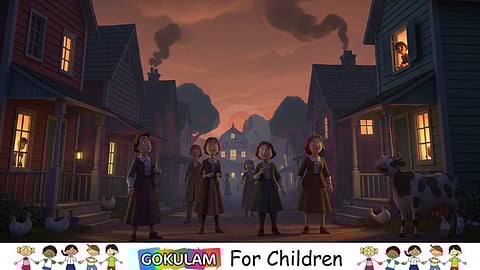
On that day, people woke up expecting sunlight. Instead, they found the sky turning copper-red at sunrise. Birds stopped singing. Farm animals behaved strangely, huddling as if night had returned.
Within hours, complete darkness fell—so thick that people needed candles even at noon. It wasn’t an eclipse. It wasn’t a storm. The world simply went dark.
Children cried in fear. Farmers abandoned fields. Churches filled, as many thought it was the “end of days.”
Shops closed. Schools sent children home. Women lit lamps in their kitchens, though it was still midday. Fishermen who went into the sea returned immediately because the water looked like black ink.
The darkness spread across several towns and lasted 14 hours—from morning to past midnight.
For centuries, no one knew why it happened. There was no internet, no scientific equipment, and no quick explanations.
Only in the 21st century did researchers make a breakthrough. Old diaries, tree-ring studies, and atmospheric records revealed something fascinating:
A massive forest fire in Canada.
Thick smoke rising high into the atmosphere.
Unusual wind patterns carrying the smoke south.
Cloud cover combining with the smoke to block the sun completely.
The people of 1780 had witnessed one of the world’s earliest documented smoke-induced blackout events.
The Dark Day is rarely taught in schools, yet it is a powerful reminder of how nature can transform an ordinary day into a moment of mystery.
It shows how:
Climate events can shape history.
Natural disasters can affect regions far away.
Human understanding grows with time.
And most importantly—it reminds us that even in history, there are true events so strange that they feel almost unreal.
