
Subscribe
- முகப்பு
- கல்கி
- மங்கையர் மலர்
- தீபம்
- கோகுலம்/Gokulam
- முக்கிய பிரிவுகள்முக்கிய பிரிவுகள்
- தொகுப்புகள்தொகுப்புகள்
- PremiumPremium

New Year is supposed to begin on January 1st, right? That’s what we all know. But guess what? Long ago, people actually celebrated New Year on the wrong date—and it turned into a funny real-life incident in history!
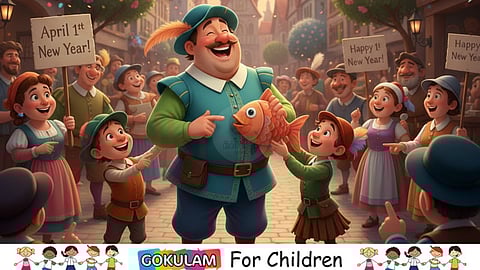
A long, long time ago in Europe, people followed an old calendar called the Julian Calendar. According to it, New Year was celebrated on April 1st instead of January 1st. People wore new clothes, visited friends, and wished each other “Happy New Year” in springtime. Everything was normal for them.
Then came a big change. In 1582, the King of France announced a new and improved calendar called the Gregorian Calendar. This calendar fixed mistakes in dates and declared that January 1st would be the official New Year. Most people accepted the change quickly.
But here comes the funny part! 😄
Some people didn’t know about the change because there were no phones, TVs, or WhatsApp messages back then. Others were just confused or didn’t believe it. So, they continued celebrating New Year on April 1st, just like before.
Other people found this very amusing. They started teasing those who celebrated New Year late. They played harmless tricks on them, sent silly invitations, and even stuck paper fish on their backs without them noticing! Everyone laughed at these 'late New Year people'.
Over time, April 1st became famous for jokes, tricks, and laughter. That’s how April Fool’s Day was born—because of people celebrating New Year on the wrong date! 😆🎉
When we think about it, it’s funny to imagine people wishing “Happy New Year” in April while others were already months ahead. It teaches us that even mistakes can turn into fun traditions.
For us children, this story shows that history is not always serious. Sometimes, it’s full of laughter, confusion, and silly moments—just like our own New Year celebrations when alarms fail, cakes fall, or fireworks don’t light on time! 😂✨
