
Subscribe
- முகப்பு
- கல்கி
- மங்கையர் மலர்
- தீபம்
- கோகுலம்/Gokulam
- முக்கிய பிரிவுகள்முக்கிய பிரிவுகள்
- தொகுப்புகள்தொகுப்புகள்
- PremiumPremium

Chettinad jewellery was very different from ordinary ornaments. Many pieces were large, bold, and full of intricate carvings. Some famous examples include:
The Oddiyanam: A magnificent waist belt.
The Vanki: A curved armlet.
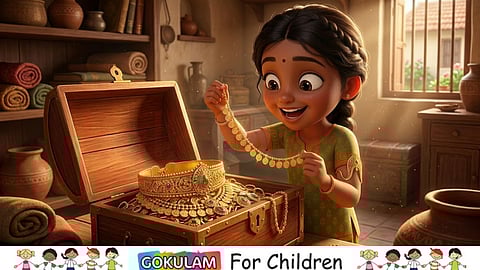
The Kasu Malai: A necklace made of delicate, coin-shaped pieces.
These ornaments were often crafted from gold and decorated with vibrant rubies, emeralds, and diamonds. But these jewels were not just for decoration—each design told a story. For example, the coin-shaped designs in the kasu malai represented prosperity and good fortune. Wearing them during weddings and festivals made people feel proud of their deep-rooted traditions.
Many elders believed that jewellery also helped the body stay healthy. Heavy gold waist belts helped maintain proper posture while walking or dancing. Armlets, Anklets and bangles gently pressed against specific points on the body, which people believed improved blood circulation.
Gold itself was thought to be special. In traditional beliefs, gold jewellery touching the skin was said to help maintain body warmth and promote positive energy.
For a time, these traditional ornaments slowly disappeared from daily life. Modern fashion became simpler, and younger people stopped wearing such heavy jewellery.
Chettinad jewellery is more than just shiny gold; it is a piece of history, culture, and family tradition. When we learn about these ornaments, we also learn about the travels, creativity, and stories of the people who made them.
The next time you see a traditional necklace or armlet, remember: it is not just jewellery—it is a sparkling piece of history that connects the past with the future. ✨
